


Poland’s official currency is the Polish zloty (Polski Złoty): or more precisely the “new Polish zloty,” which is why its international code is PLN rather than PLZ, the code that referred to the old zloty (before 1995). Despite EU membership, Poland still hasn’t adopted the euro as of 2026: the common European currency has no official status in the country.
Polish banknotes and coins
The zloty is divided into 100 grosz (groszy). Banknotes in circulation come in denominations of 10, 20, 50, 100, 200, and 500 zloty (smaller amounts exist only as coins), along with coins of 1, 2, 5, 10, 20, and 50 grosz, plus 1, 2, and 5 zloty. The National Bank of Poland (Narodowy Bank Polski, NBP) periodically updates banknote security features, but the set of denominations hasn’t changed in years.
Inflation in Poland (2026)
Only the NBP is authorized to issue the zloty. According to Statistics Poland’s (GUS) preliminary estimate, inflation in Poland in June 2026 stood at 2.5% year-on-year: essentially at the NBP’s inflation target (2% ± 1 p.p.). That’s a notably calmer level than the inflation spike of the early 2020s.
Can you pay in euros in Poland
Officially, transactions in Poland must be settled in Polish zloty: you can’t require a store to accept payment in euros. That said, due to Poland’s proximity to the Eurozone and the large number of tourists from other EU countries, some chains (e.g. large grocery stores and businesses in tourist areas) accept euros as an exception, using their own internal exchange rate, which may differ from the official NBP rate. Change is usually given in zloty, and coins typically aren’t accepted.
Where to exchange euros for zloty
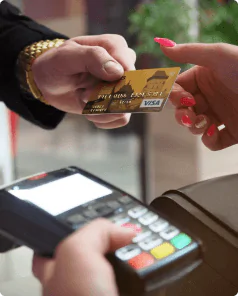
You can exchange euros at any currency exchange office: called a “kantor” in Polish. Exchange rates at train stations and airports are usually less favorable than in the city center. Visa and Mastercard are widely accepted in Poland, as are contactless smartphone payments (Apple Pay, Google Pay, BLIK): even at small shops. An alternative is to withdraw zloty from an ATM using a foreign card, but keep in mind the ATM fee and currency conversion charge.
When will Poland adopt the euro
The straightforward answer: there’s no known timeline, and no specific date exists. As of 2025-2026, the Polish government isn’t working toward Eurozone accession and hasn’t even started the ERM II procedure: the mandatory preparatory stage. Poland’s finance minister stated plainly in 2025 that the country doesn’t meet the convergence (Maastricht) criteria, and that discussion of specific dates is, in his words, a “surrogate debate.”
Public opinion also isn’t in favor of a quick switch: according to 2024-2025 surveys (the Ariadna panel and others), around 60-74% of Poles oppose adopting the euro, while about 26-28% support it. The main concerns are a sharp rise in prices after the currency switch (the so-called “cappuccino effect,” first described after Italy adopted the euro) and the loss of a degree of economic sovereignty.
If you’re planning to run a business in Poland as a JDG (sole proprietorship), keep in mind that all settlements with ZUS, the tax office, and business partners are done in zloty: worth factoring in when registering a company.









Got a question about this article?
Write it in a comment below. We read every one and reply.
Add comment